engine
Active Development
Ragecraft Minecraft Server
A fully custom Minecraft-compatible server written in Node.js, focused on procedural world generation, multithreaded chunk systems, custom lighting propagation and engine-level experimentation.
Custom Minecraft protocol implementation with procedural terrain generation, asynchronous chunk processing and real-time skylight propagation.
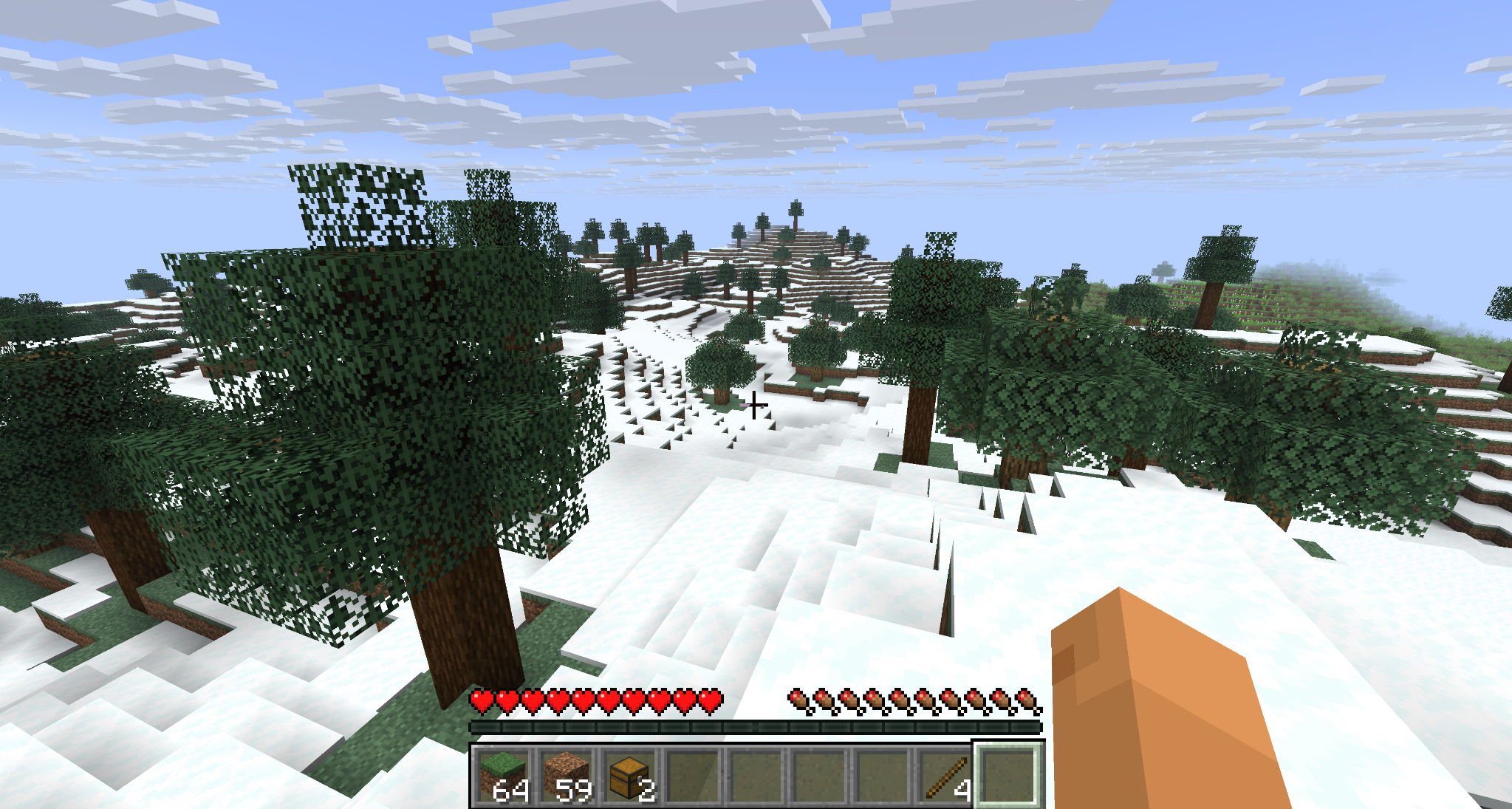
Screenshots
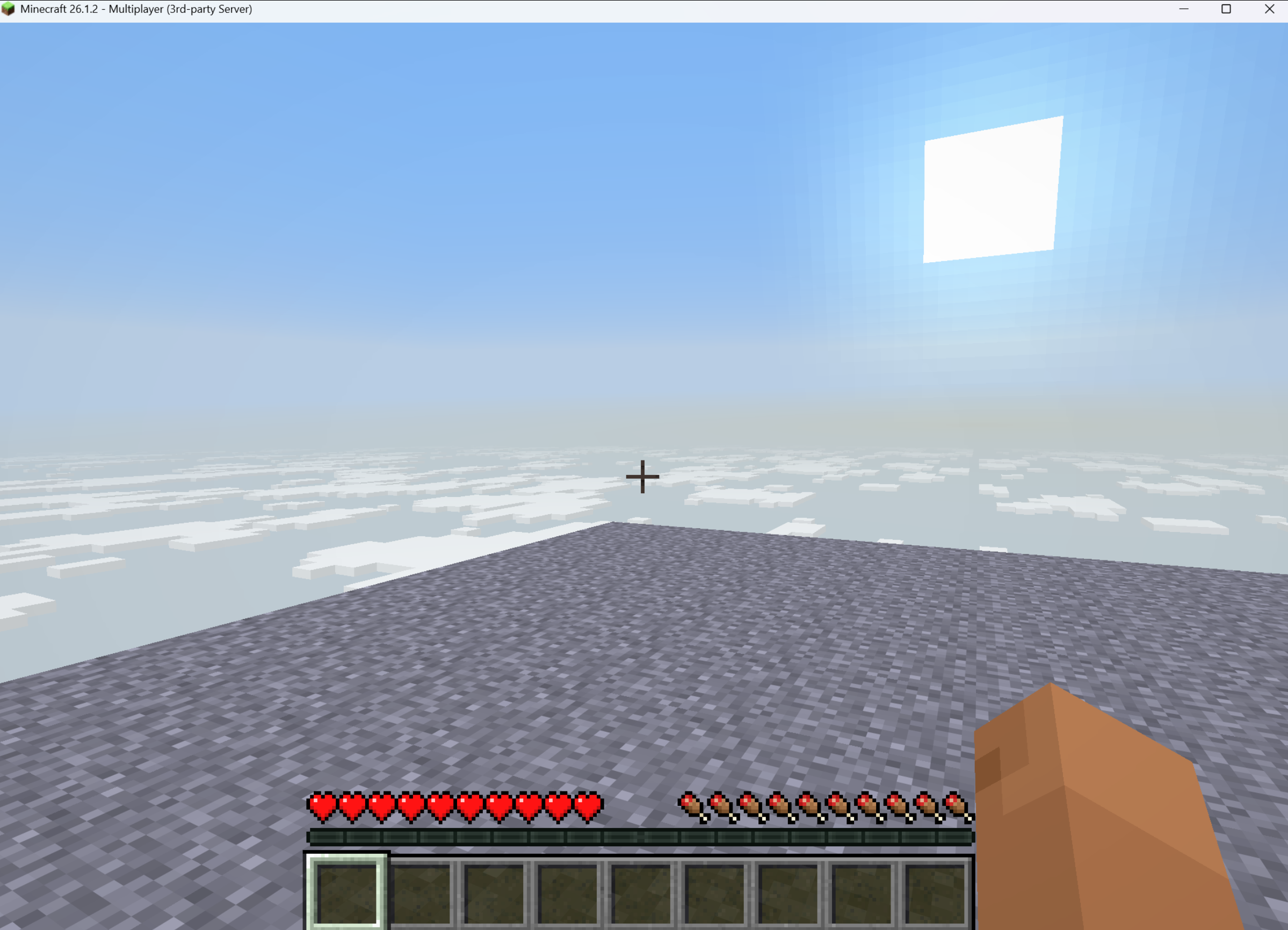
01 — First Terrain Generation
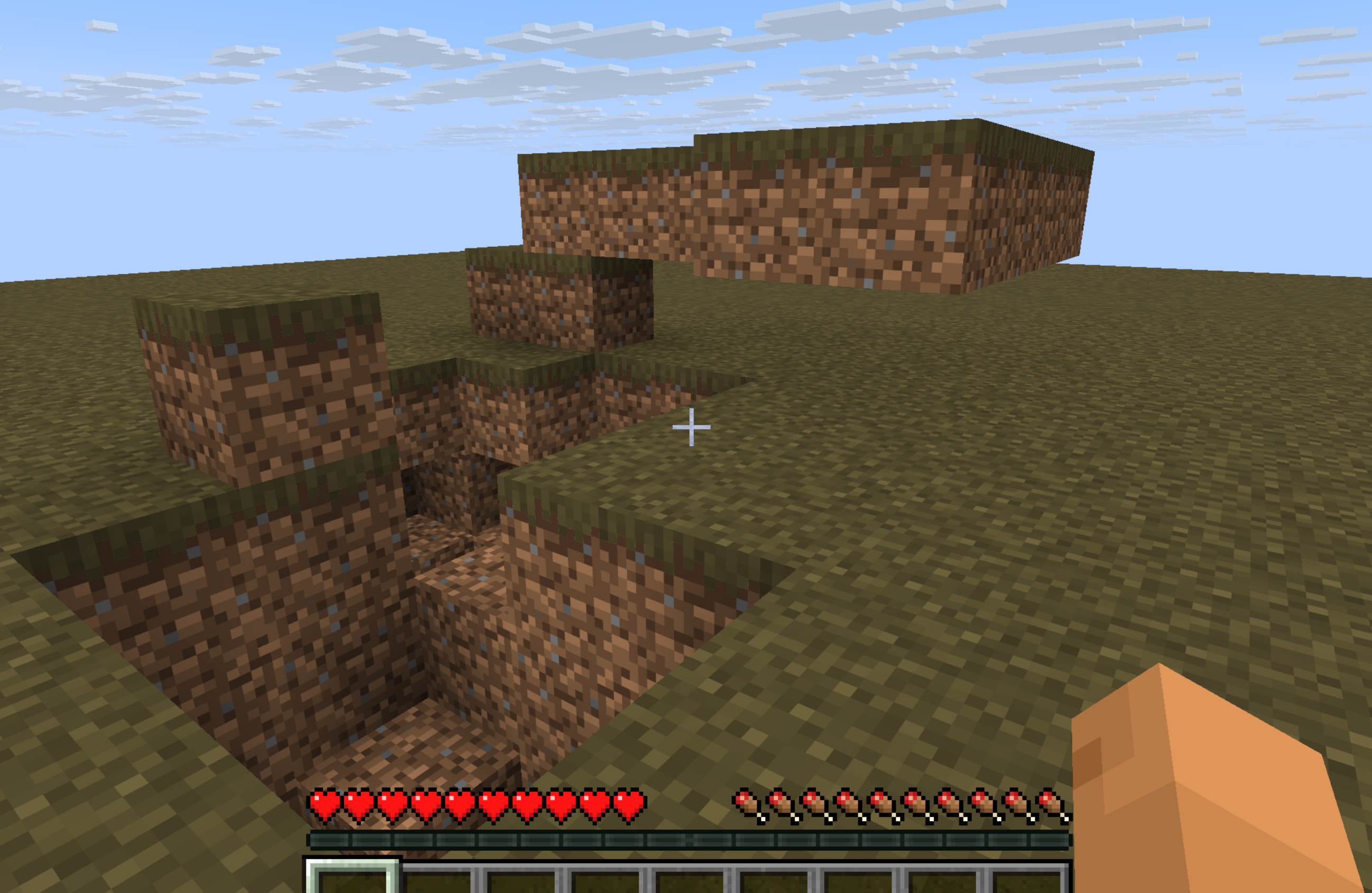
02 — Block Placement and Client saves
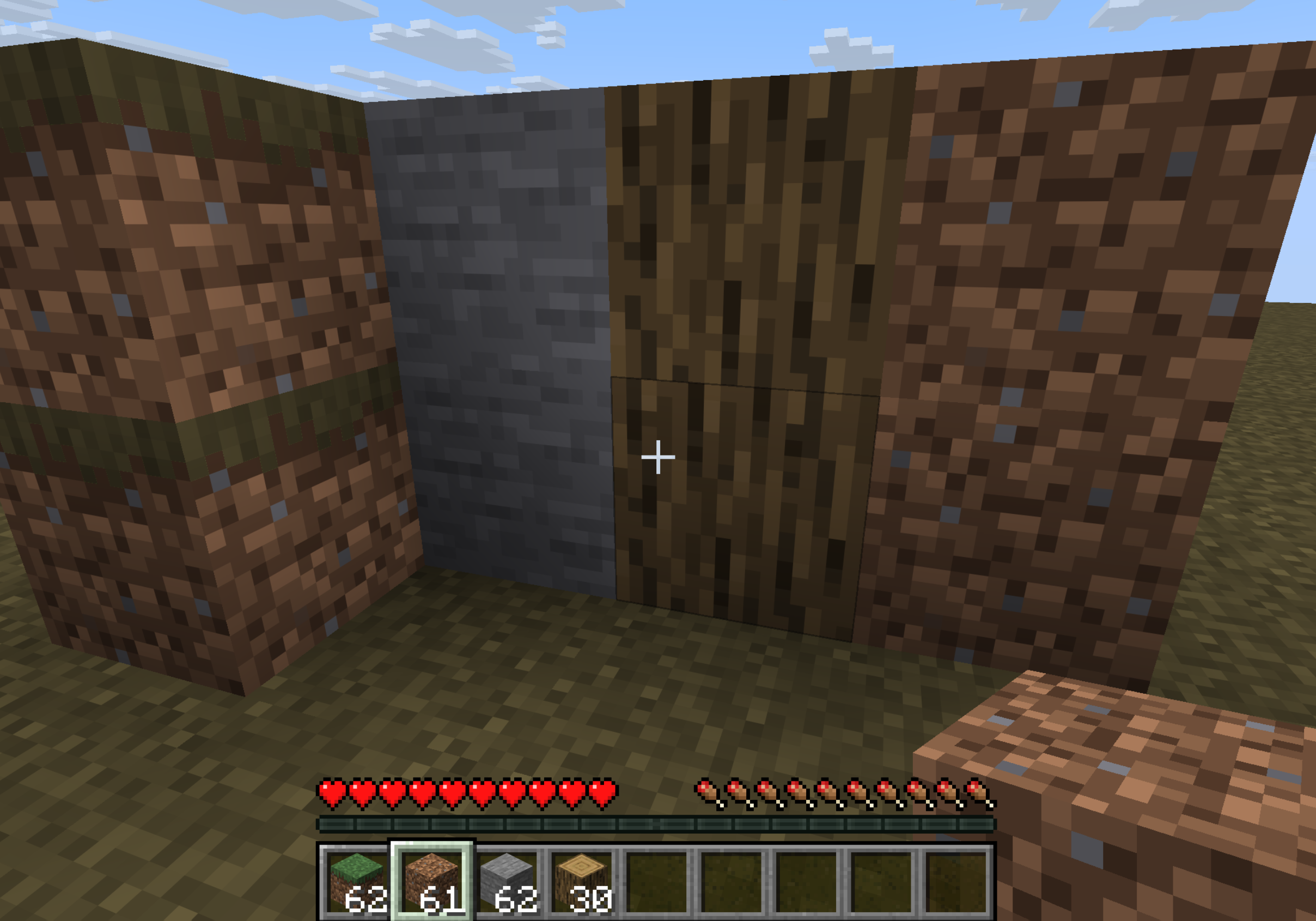
03 — Adding block types
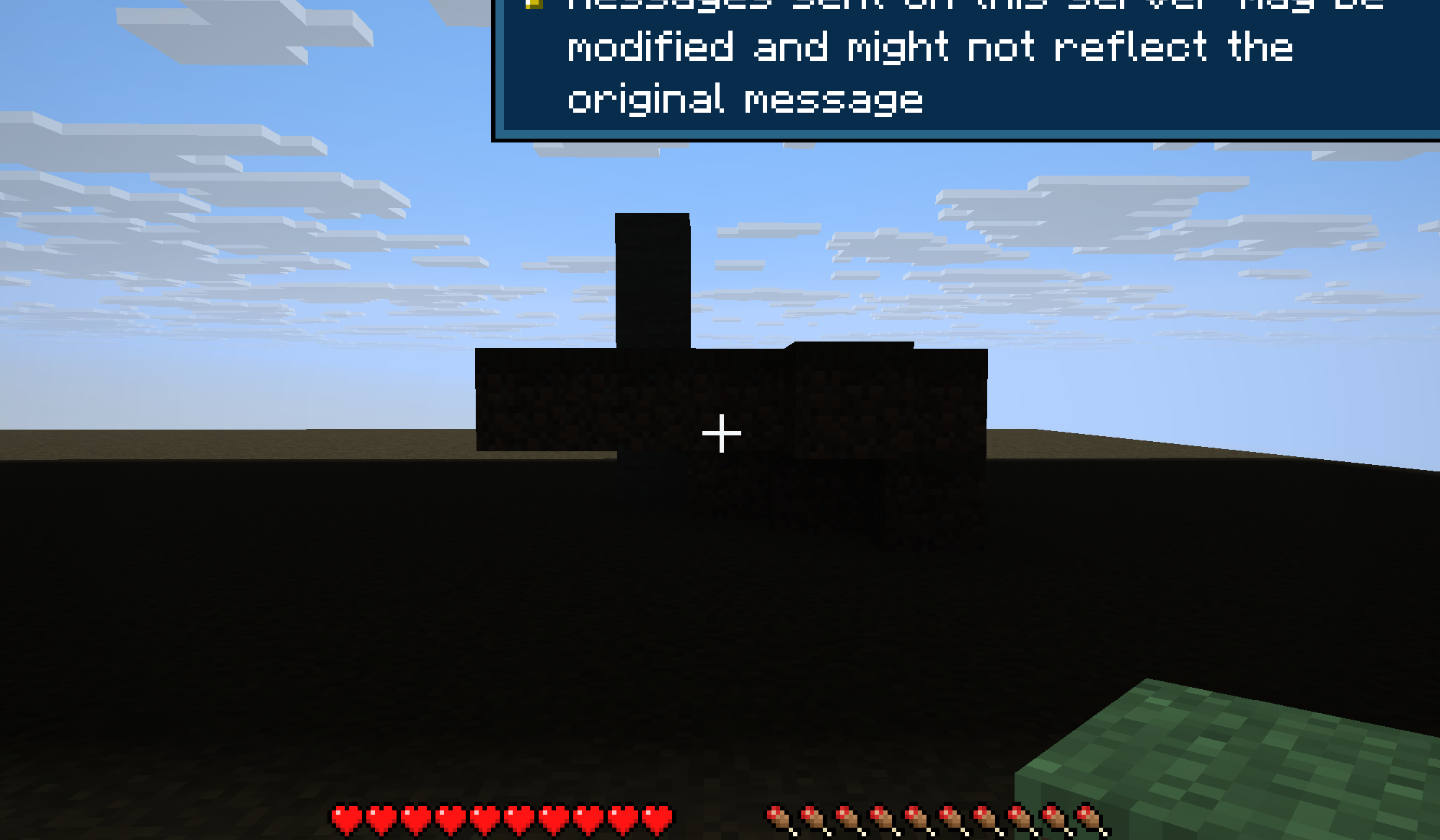
04 — Lighting error fixes and performance improvements
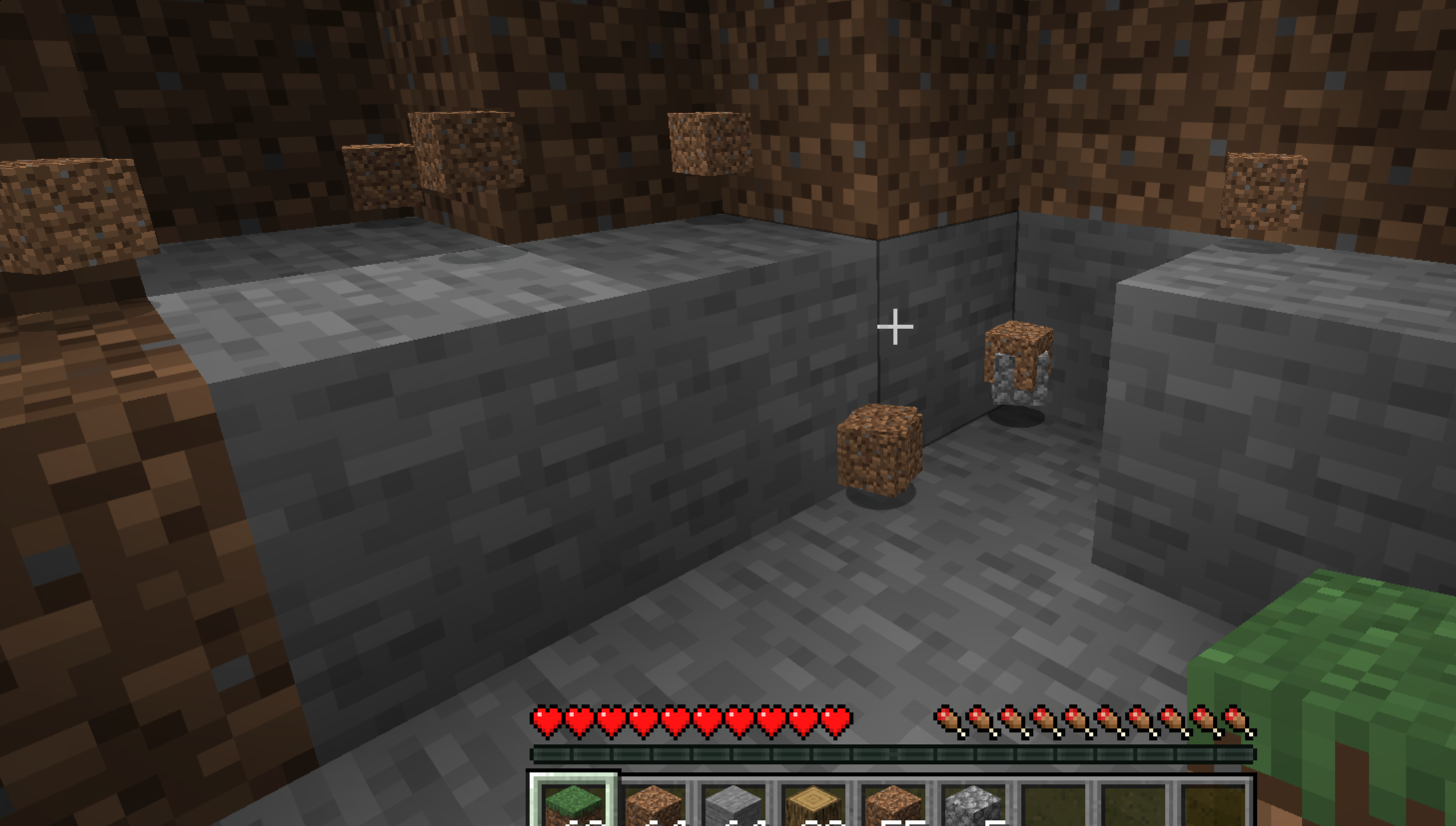
05 — Survival Gameplay
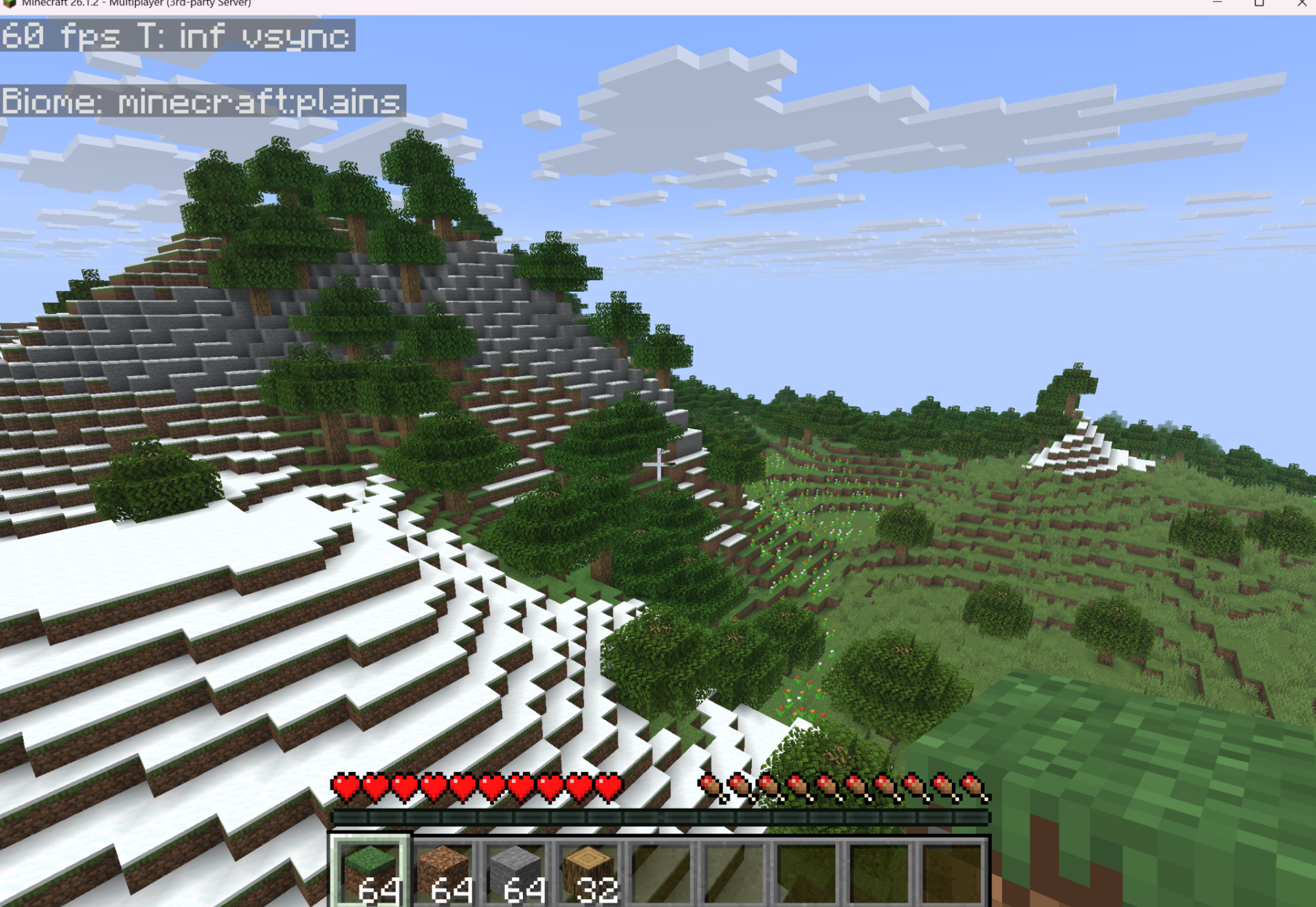
06 — Biome, with temperature and humidity maps, mountains and caves
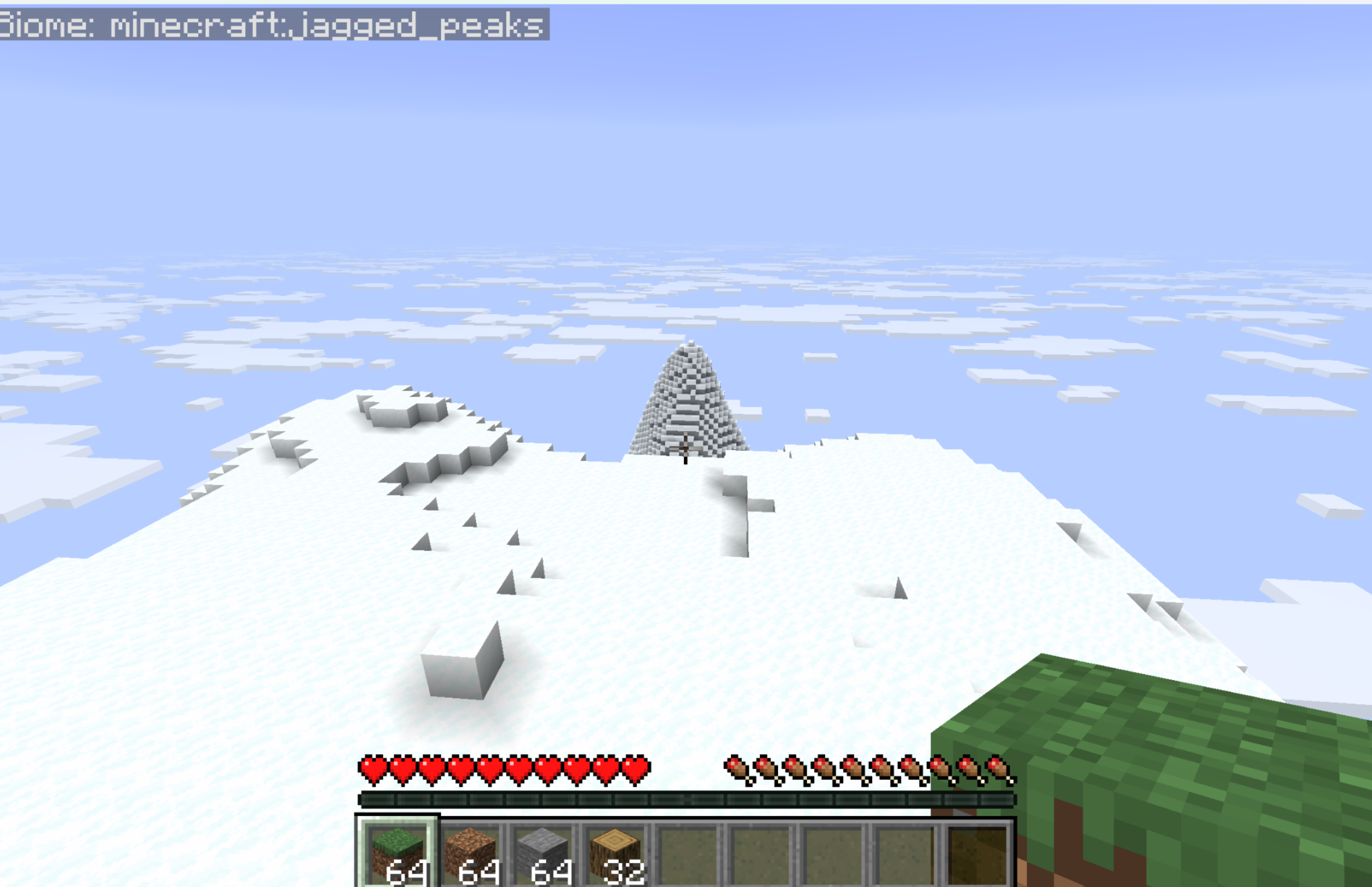
07 — Propper Mountains and Biome Transitions
Ragecraft started as an experiment in understanding how Minecraft actually works beneath the surface. Rather than building mods or plugins, the project focuses on implementing a fully custom Minecraft-compatible server from scratch using Node.js.
The project explores the technical foundations of voxel sandbox games: chunk streaming, procedural terrain generation, lighting propagation, inventory synchronization, crafting systems and real-time multiplayer networking. The goal is not simply to recreate Minecraft, but to understand and improve the underlying systems that make large voxel worlds possible.
One of the core focuses of the project is performance. Ragecraft implements asynchronous chunk generation and multicore world processing using worker threads to dramatically reduce terrain loading stalls. Chunk generation, biome placement, lighting updates and world preparation are distributed across multiple CPU cores to keep gameplay responsive while large worlds stream in dynamically.
Lighting systems became one of the most technically challenging parts of the project. Implementing proper skylight propagation across slopes, caves and chunk boundaries required debugging complex edge cases involving neighbour chunk dependencies, section serialization and Minecraft protocol lighting packets.
The terrain generation system uses layered biome regions and height-based biome distribution to create more natural world transitions. Instead of relying purely on flat biome maps, the world generator separates terrain into lowland, midland, highland and mountain biome bands before applying additional climate and noise variation.
The project also experiments with rendering and visual presentation using modern Minecraft shader pipelines. This has provided useful inspiration for future plans involving custom voxel rendering, atmospheric lighting and modern lighting systems for voxel environments.
Ragecraft is ultimately less about cloning Minecraft and more about exploring the fascinating technical problems hidden underneath voxel sandbox games: procedural generation, large-scale world streaming, asynchronous processing, lighting propagation and multiplayer synchronization.
Challenges
- Reverse engineering and implementing large portions of the Minecraft networking protocol
- Handling modern Minecraft world heights and section-based lighting data correctly
- Designing a multithreaded chunk generation pipeline without introducing race conditions
- Building custom skylight propagation systems for complex terrain and slope lighting
- Managing chunk neighbour dependencies during asynchronous lighting and meshing
- Debugging packet serialization issues across rapidly changing Minecraft protocol versions
- Balancing world generation speed with real-time gameplay responsiveness
- Handling inventory synchronization, crafting systems and entity updates in a custom server environment
Lessons Learned
- Practical experience implementing real-time multithreaded world generation systems in Node.js
- A much deeper understanding of voxel lighting propagation and chunk-based world structures
- How modern Minecraft handles chunk sections, lighting masks and world serialization
- The importance of dependency management in asynchronous engine systems
- How deceptively complex seemingly simple gameplay systems become at engine level
- Improved understanding of networking synchronization and client/server architecture