Markdown writing, preview, and auto-save feedback.
Back to Selected Systems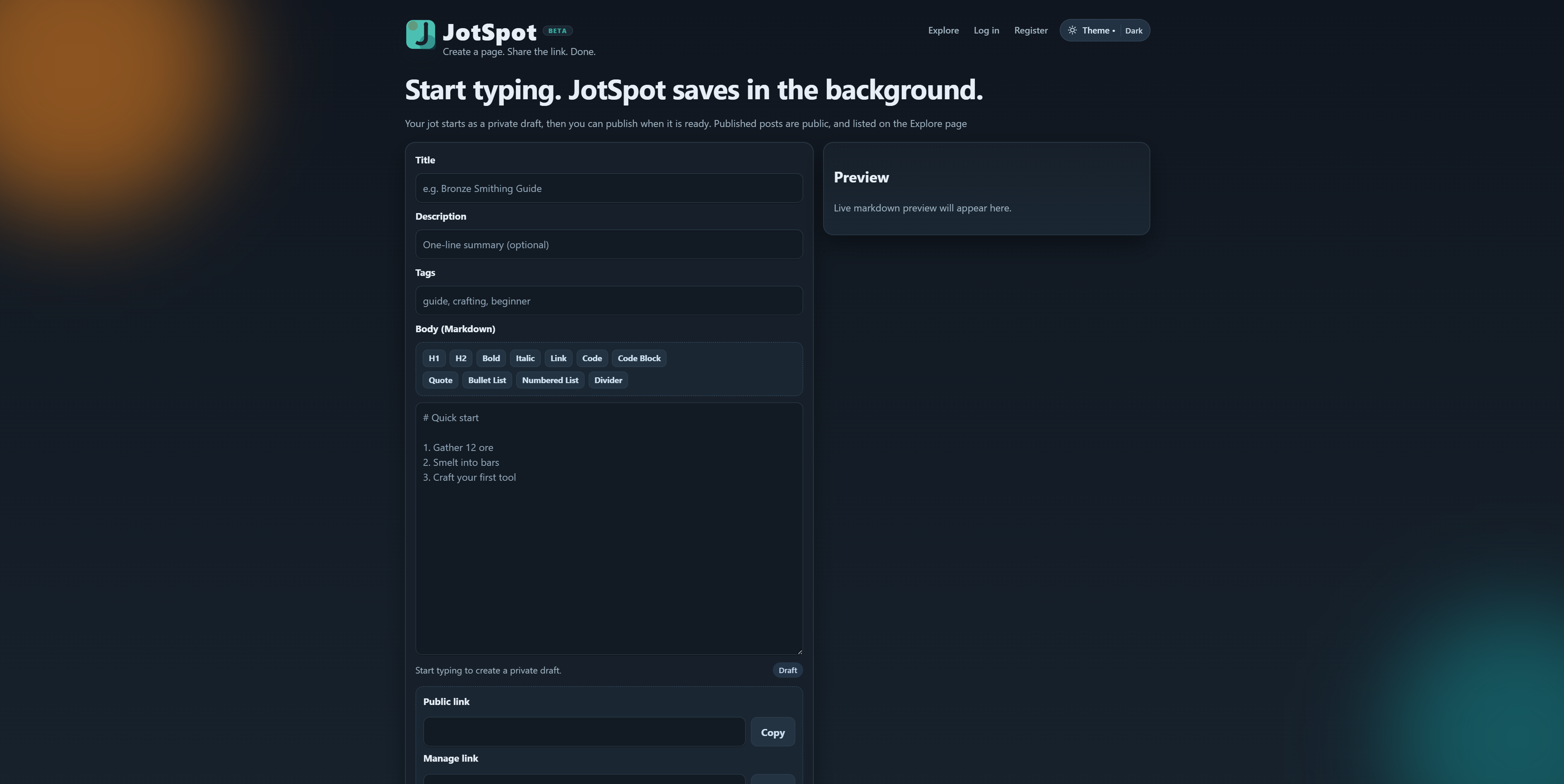

Editor Flask app PostgreSQL Public + CLI
webapp
Live
JotSpot
A fast note-sharing web app focused on simple publishing and clean writing.
PostgreSQL-backed publishing with auto-save, comments, likes, and CLI token workflows.
Screenshots
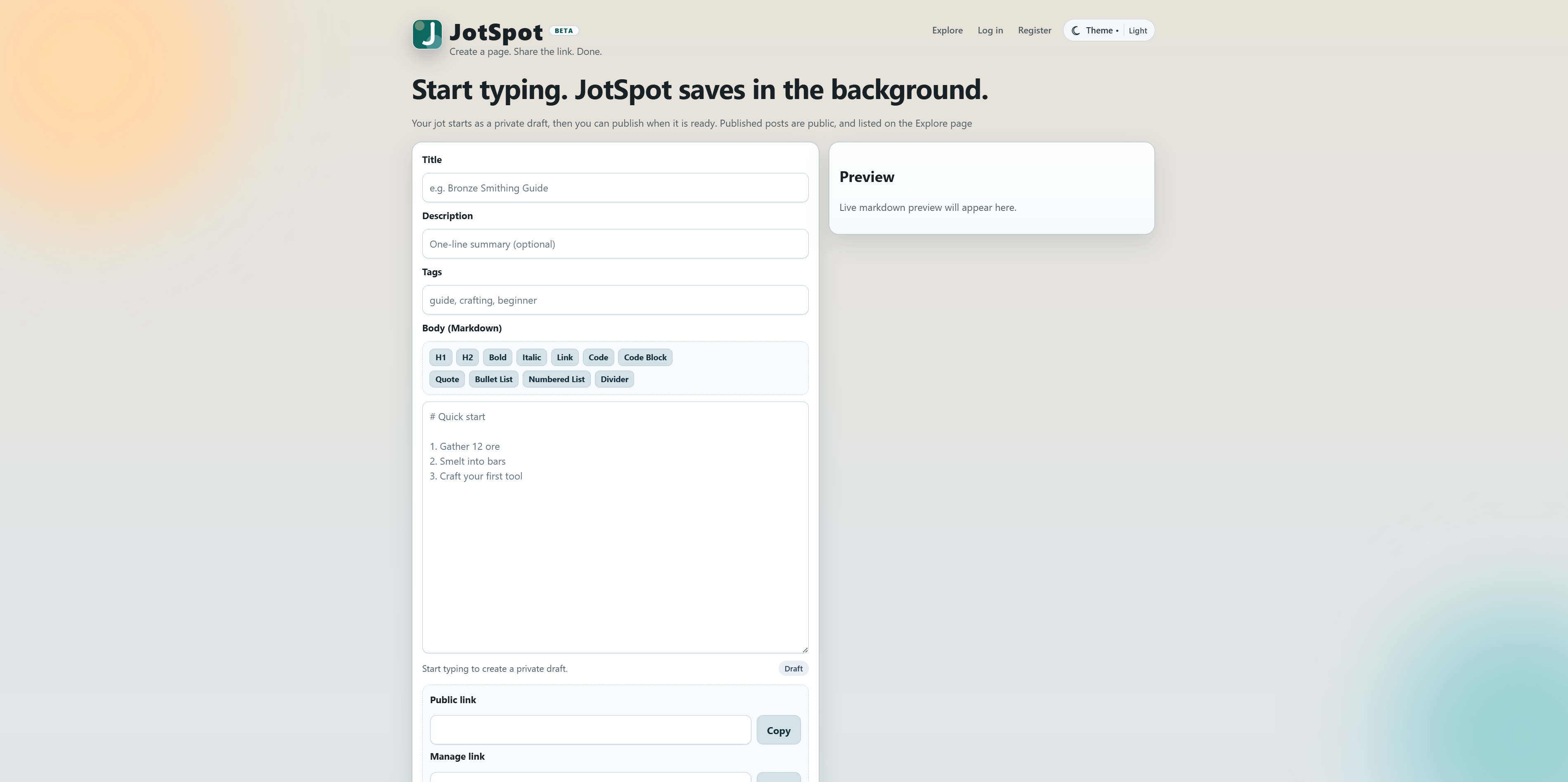
01 — The Welcome Page
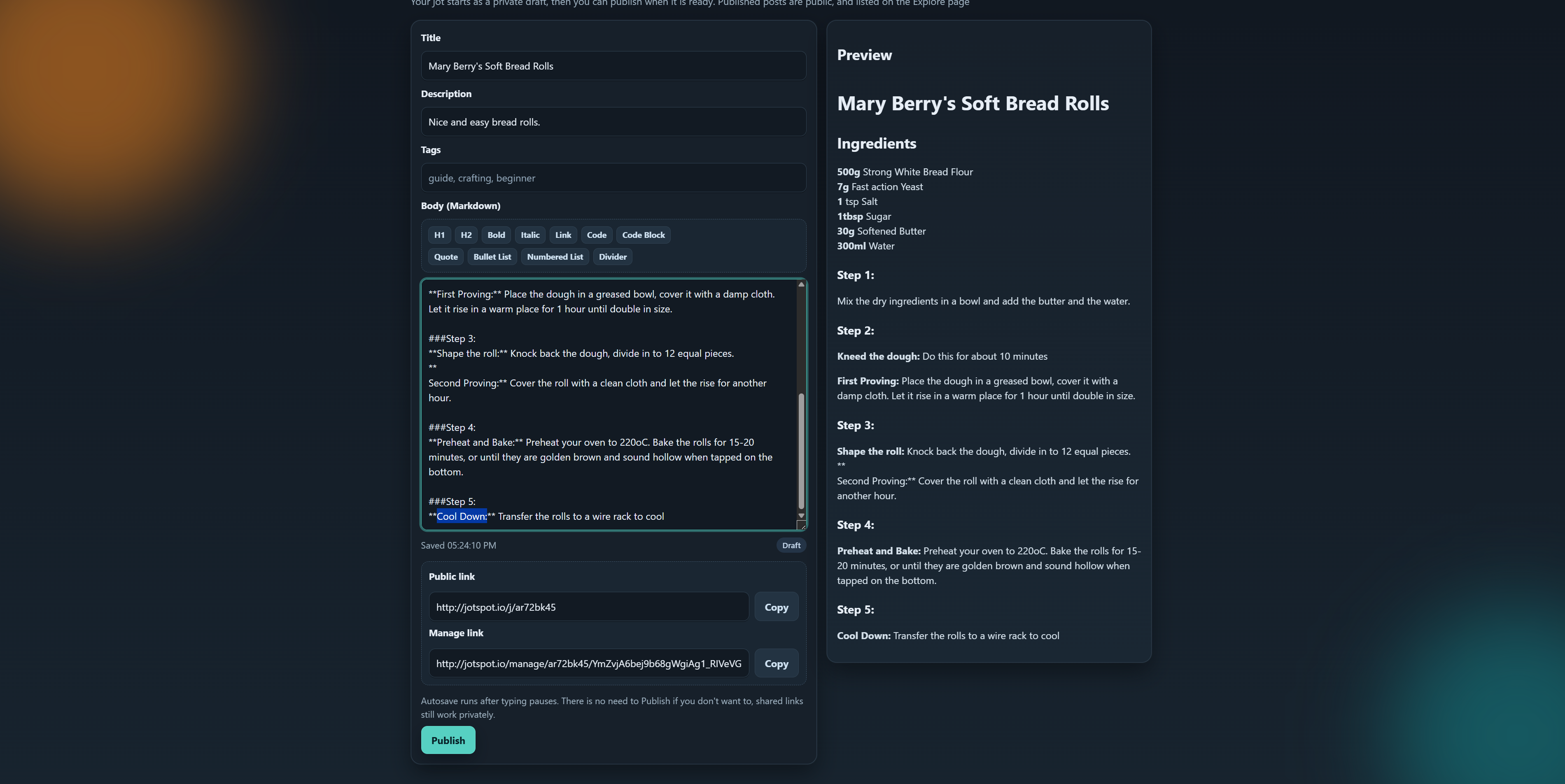
02 — Making a Jot
03 — The Explore Page
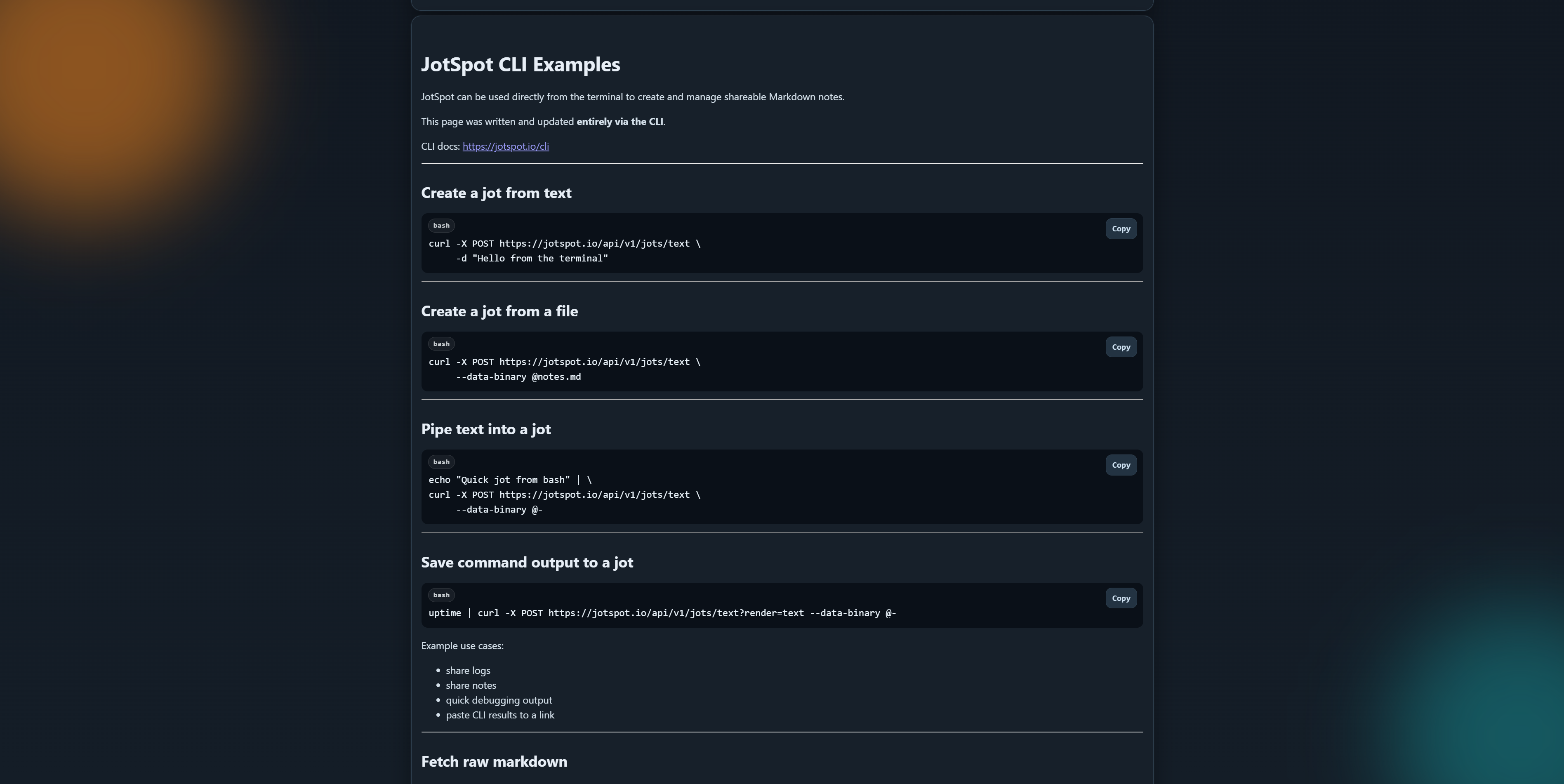
04 — CLI Options
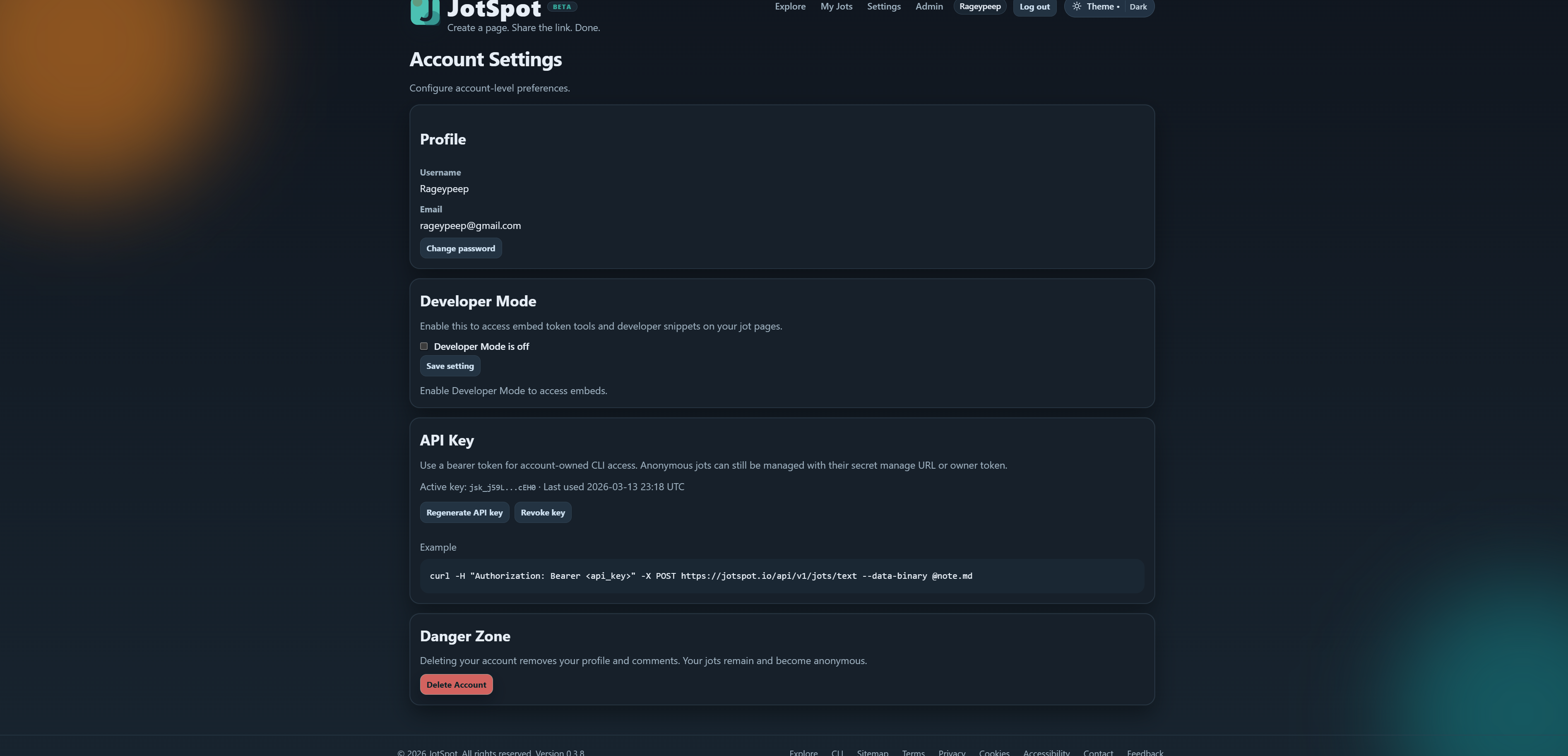
05 — User Settings
JotSpot is a web app for sharing notes quickly and easily.
It emphasizes a clean writing experience with minimal distractions, while providing practical features like auto-saving and simple publishing.
The project was a fun experiment in building a focused web app with a strong emphasis on user experience and simplicity.
Overall, it was a rewarding project that allowed me to explore web development with a focus on writing and sharing content in a streamlined way.
Extra attention was given to page loading times and smooth interactions, with the goal of making jotting down and sharing notes as fast and seamless as possible.
JotSpot evolved from an earlier full-stack prototype called Simple Pages, where the core ideas of user-owned content and frictionless publishing were first explored.
Problem
Publishing notes should not feel like managing a CMS
JotSpot focuses on reducing friction: open the editor, write, auto-save, publish, and share. The product direction came from learning where the earlier Simple Pages prototype felt too heavy for a writing-first tool.
Approach
Server-rendered interaction instead of SPA overhead
Flask owns routing, persistence, authentication, and permissions, with PostgreSQL storing user-owned notes, metadata, comments, and publishing state. HTMX is used where the interface needs to update quickly, such as previews, saving states, and smaller interaction loops.
Result
A focused publishing system with useful developer edges
The CLI path and developer options make it more than a basic note app: it can support terminal workflows, logs, API-style publishing, and quick sharing without losing the clean writing experience.
System path
JotSpot publishing flow
A Flask, HTMX and PostgreSQL publishing system built around low-friction writing, auto-save, public discovery, and optional CLI workflows.
Routes, auth, permissions, pages, comments, and publishing logic.
User-owned jots, metadata, likes, comments, and API tokens.
Shared pages, explore views, and terminal publishing paths.
- Auto-save keeps the writing loop fast while Flask remains the source of truth.
- The CLI gives the system a practical path for logs, automation, and developer workflows.
- The product is the cleaner rebuild of ideas first explored in Simple Pages.
Key Features
- Instant saving and live updates
- CLI Interface leting you push logs from command line
- Publish content for others to read, like and comment
- Share jots with ease, with one click links
Challenges
- Designing a fast and fluid user experience
- Creating a auto-save feature that supports a number of users at once
- Making a user management system with admin controls